
Gold Mines and Moonshine

This is just an illustration of panning for gold.
“Francis Robbins went west to the gold rush and was never heard from again.”
This was a story I had never heard until I started researching my family history. And that’s all there was to it, too. Nothing about the man himself or the family he left behind. Because nobody knew anything else.
Frank left his family
Francis “Frank” Robbins was my 3rd great-grandfather. He was listed on the 1850 census, at age 22, as living with his parents in Parke County, Indiana. In May 1851 he married Eliza Jane Kibby. Their son, Josiah, my 2nd great-grandfather, was born in May 1852. By September 1855 Eliza had married her second husband, Jacob Hiler.
So, when, exactly, did Frank leave, and when did Eliza know he wasn’t coming back?
In 1860 Eliza and Jacob were living with 2 children surnamed Hiler (Minerva 12 and James 9, from Jacob’s first marriage) and 4 children surnamed Robbins (although the younger ones went by Hiler later on): Josiah 8, Mary 3, John 1, and George 4/12.
So, who was the father of Mary, John and George? Probably Jacob, based on the marriage date. But why, then, were they going by Robbins in 1860? (That’s another puzzle for another day.)
Did Frank ever meet (or even know about) his son? Either way, Josiah surely grew up with the knowledge that his father “went west.”
Where did he go?
And where, exactly, was “the gold rush”? It’s kind of hard to research a location if you don’t know where to look! There were multiple gold rushes in the western United States in the mid-1800s, including California, Colorado, Nevada, Montana, and Idaho. And many miles in-between. But California seemed the most likely candidate.
So why could I not find him?
What happened next?
Did Frank reach his destination? If so, why did his family never hear from him again? Did he intentionally abandon them? Did he and Eliza officially (or unofficially) call it quits before he left? (I have found no divorce record.) Did he strike it rich? (This is highly unlikely, statistically speaking.) Did he start a new family? Did he die on the way and is buried in an unmarked grave somewhere? Have his bones turned to dust next to a secluded stream in which he was panning for gold alone?
Checking periodically
Mind you, I have not spent a ton of time searching for Frank. But I have checked periodically over the years to see if new records are available online that will help me determine what happened to him.
I found multiple Francis/Frank Robbinses in the mid-1800s. The two most likely candidates are in Siskiyou County, California (1860 Federal Census), and Snohomish County, Washington (1889 Territory Census — statehood came later that same year). Both areas were in the heart of gold country. Both men were listed with a close-enough age or birthdate, with a reported birthplace of Indiana. Both were listed as farmers. So, were either of them “my” Frank? Both? Neither? Did he fail at gold mining (likely) and become a farmer (or farm hand)?
I’ve been slow to declare that I’ve “found” Frank because one document — or two of them, three decades and two states apart, with nothing else to tie them together — is simply not enough to satisfy the Genealogical Proof Standard.
Also, it is worth noting, this is a blog post, not a genealogical proof.
Reviewing what I already know
I recently tried again, starting the way genealogists do when faced with a “brick wall” — I reviewed what I already knew. All I had (after Frank’s disappearance) were the two census records from California and Washington.
And this time I did notice something new!
Previously, in Siskiyou County, California I had noticed Frank was living with a family and a couple of other single men. I thought nothing of that, assuming they were farm hands or boarders. But now I noticed that the head of household was a man roughly Frank’s age who was also listed as being from Indiana. Although it turned out he was born in OH, he had indeed lived in Wabash County, Indiana in 1850 with his parents.
Was Frank lucky enough to find someone from Indiana to board with and/or work for once he arrived in California? Or did they know each other previously and migrate from Indiana to California together? How did they meet? Wabash is several counties away from Parke. Was Jerry simply passing through on his own way to the gold rush? And did Frank say, “Hey, wait up, I’ll come too” — ?
The man’s name was Jeremiah “Jerry” Heckathorn.
Researching Frank’s FAN club
Another thing genealogists do is they research an ancestor’s “FAN club”.
FAN stands for Friends, Associates and Neighbors. This term was coined by genealogist Elizabeth Shown Mills, but I like to include Family in with the Fs to remind myself how often researching a child, or sibling, or cousin, or in-law will shed light on an ancestor’s otherwise shrouded life.
So I did a deep dive on Jeremiah “Jerry” Heckathorn.
Although records about Frank are scarce, records about Jerry are plentiful, as were the number of children he and his wife Anna had together (thanks in part to two sets of twins). One way I was able to trace Jerry’s movements was by noting the birth years and places of his twelve children:
Anna 1854 OR — Ida 1857 OR — Mary 1859 CA — Dora 1859 CA
Martin 1864 CA — Henrietta 1866 CA — Henry 1866 CA — Emma 1868 WA
Florence 1870 OR — Elsie 1873 OR — Francelia 1875 OR — William 1880 OR
In looking at their respective timelines, I tracked both men, found some overlap, and also noticed that both were missing from any 1870 census record. (Maybe they were together, wherever they were at that time.)
Frank born 1828 IN > 1850 IN > 1860 CA > 1870??? > 1880??? > 1889 WA (died when and where?)
Jerry born 1827 OH > 1850 IN > 1860 CA > 1870??? > 1880 OR (died 1891 in Siskiyou County, California, and was buried in Jackson County, Oregon)
If Frank settled in WA, did he ever live in OR? (I think it’s safe to say he traveled thru OR to get to WA.)
And if Jerry settled in OR, did he first go to WA? The answer to that question is: Yes! Records show that Jerry’s 8th child Emma was born there in 1868.
Why, then, did Jerry return to Oregon to spend the rest of his life? More digging revealed an obvious tie to the area, the most compelling of all reasons: Family. He and his brother George and their families are considered pioneers of Jackson County, Oregon.
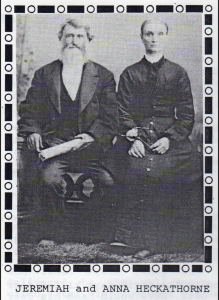
These are not my ancestors. But they were members of Frank Robbins’ FAN club.
Don’t forget about maps!
I use Google extensively in my research, as well as paid and free genealogy sites, and I refer to maps frequently when trying to answer questions.
Sample map question: Where is one county in relation to another county, and are they maybe the same place, one county having been formed from another, and when did that happen?
In this case, I thought I knew where Siskiyou County was and never looked it up until just now, while writing this blog post. I thought it was near Sacramento, specifically near Sutter’s Mill, where the California Gold Rush started. But it isn’t! It’s way up near the Oregon border. And Jackson County, Oregon is only 50 miles away. They are equidistant from the Oregon/California border, and knowing how close they are helps to make sense out of these facts: 1) Jerry’s first two children were born in Oregon, 2) a third brother, David, settled in California, and 3) Jerry died in California and was then buried in Oregon.
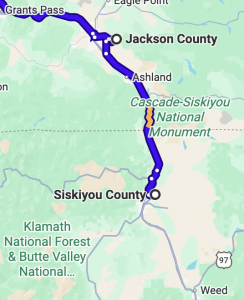
Jackson and Siskiyou Counties are right across the California-Oregon border from one another.
Is wanderlust hereditary?
Meanwhile, Josiah Robbins (1852-1931) became a traveling salesman. This is according to his granddaughter (my grandmother) Villa Mae Lawrence Hankins (1904-1986). Although he was variously listed in census records as a coal miner, a sawmill worker, and a farm laborer, she claimed that he simply worked long enough to save up money for a trip. She also credited him with her own wanderlust, which she thought he may in turn have inherited from his father Francis/Frank, who “went west.” Although I don’t think she ever left the country, she did visit many U.S. states, including Alaska and Hawaii. She was more educated than most women of her time, having earned both nursing and teaching degrees, and was nonetheless known to say, “Travel is the best education.”
Josiah, while always a resident of Parke Co, Indiana, was known to periodically pack up some, if not all, of his family members in a covered wagon, and make a trip of nearly 300 miles down to the Land Between the Rivers area of Tennessee and Kentucky (which was later flooded to become the Land Between the Lakes National Recreational Area). One of his daughters, Ivan, told her daughter, Edith, who told me, that she never made it past 3rd grade due to being taken along on several of these trips. She also reported that on one trip they buried a baby that had died on the way. (It was probably Josiah’s 3rd wife Jane’s child.)
Was moonshine involved?
Why that area of Kentucky and Tennessee, though? Did they already have ties there, or did they develop them later? We may never know for sure, but a historian I met on a research trip there told me that the people on the Land Between the Rivers were especially poor and were famous for bootlegging moonshine. This is a pet (unproven) theory of mine for all the traveling back and forth, given that my grandma (Villa) also described her father, Horace Lawrence (1882-1952), as “a drunk and a rent jumper.” Her brothers were alcoholics as well. (For reference, Prohibition lasted from 1920 to 1933).
In any case, the Robbins family from Parke County, Indiana apparently met the Lawrence family of Stewart County, Tennessee on one of these trips. Sisters Ethel and Ivan Robbins married brothers Horace and Lee Lawrence. And Jennie Lawrence (1859-1905), a sister to Horace and Lee, became Josiah’s fourth wife. Thus, to Ethel and Ivan, Jennie was a sister-in-law and stepmother at the same time! And all their children were double cousins.
Meanwhile, two more Lawrence sisters married Rushing brothers. I know little of the Rushings except that they had ties to some of the flooded areas between the rivers, including Golden Pond which was, according to Google, “renowned for moonshining during Prohibition”. If none of the Lawrences, Robbinses, or Rushings were involved in moonshining, I’d still love to have been able to ask them about what their lives were like during that time, and (a few decades later) during the time when the rivers were flooded! (Think government-built dams, submerged communities and cemeteries, displaced ancestors. I feel a new blog post coming on! Lol.)
Josiah was eventually listed as a resident of the Parke County Poor Asylum for a few months in 1927. He died in Parke County in 1931, never having known what happened to his father.
In addition to Frank having “gone west”, there’s something else that may have influenced Josiah. In the 1850 Parke County census, when his mother, Eliza, was still living with her parents, they had two young men staying with them whose occupations are listed as Peddler — a traveling salesman of sorts, trading primarily in household items. Although he wasn’t born until two years later, I wonder if Josiah’s mom told him stories about the peddlers who stayed with them when she was a girl?
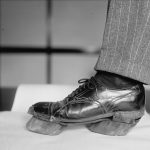
This is a historical photo and has no known connection to my family. Click the image to learn how moonshiners used “cow shoes” to evade the authorities.
What do I still not know about Frank?
Back to Frank, there are lots of questions remaining. Did he remarry and/or have children? Did he die alone after all? When and where? Did he intend to leave his family forever, or did one thing just lead to another, making it more difficult as time went by for him to reestablish contact? Did he never own property or do the other sorts of things that usually leave a paper trail?
Some things we can never know. And it’s hard for the imagination not to fill in the gaps. I feel lucky to have learned this much about him! And I’m glad to think he had the Heckahorn family as friends.
Meanwhile, I have hundreds of other ancestors to learn more about.
In Frank’s generation alone I have 32 3rd great-grandparents. But many of my lines extend to 7th generation, and others as far as 11th generation. So, there are hundreds of ancestors, all with stories of their own waiting to be told.
So, while I’m always open to new information, and more than willing to adjust accordingly, I think I’ll leave this one alone…for now.
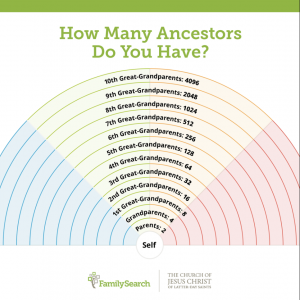
Click image to see larger and read the article.
Did any of your ancestors “go west to the gold rush” and were never heard from again? (It’s not uncommon!)
Have you solved a genealogy mystery by researching an ancestor’s FAN club?
- Hazel Thornton is an author, genealogist, and retired home and office organizer.
- Book: Hung Jury: The Diary of a Menendez Juror
- Book: What’s a Photo Without the Story? How to Create Your Family Legacy
- Book: Go With the Flow! The Clutter Flow Chart Workbook
- Feel free to link directly to this post! Click here to ask about other uses.
- Copyright 2026 by Hazel Thornton, Organized for Life and Beyond
__________________________________________________________________________________________
Share this:




That was a bit of fun Hazel! I remember grandma was not one to tolerate drinking around her, and her saying her brothers were alcoholics, but I don’t remember her saying anything about her father, or the possible context of running moonshine, so that is interesting. Thanks!
I’m glad you enjoyed it, Kendell! The “drunk and a rent jumper” quote is Grandma’s, but the moonshine running theory is all mine. The Land Between the Lakes is a fascinating area that deserves it’s own blog post (with links to videos and books). Think: government-built dams, submerged communities and cemeteries, displaced ancestors.
VERY interesting, Hazel, and well done. Your history is my history so I’m glad you hunted my 2nd great-grandfather down.
Glad you enjoyed it, George Ann!
Hazel, this was so much fun to read. My husband is the one in our family to trace our histories. He can spend hours and hours working his way back and also doing some creative imagining. I love hearing the stories and reading this one was so engaging.
What a great read! While I have an ancestry chart or two done by some family members, beyond the names and maybe where they were born, I know almost nothing.
I am having a family reunion this year at my home and one of my sisters has said that we should put out a table with what we know about our parents and grandparents. After we die, many stories will be lost.
This is SO interesting! Sometimes it feels futile to try and research things that happened when there are so few records available. Your diligence and resourcefulness is inspiring!
Wow, Hazel, this is an amazing story. Thank you for sharing.
I love the idea of adding maps to the genealogy history. I didn’t add them to my ancestor album. I will have to go back and do that. Thanks for the idea.
In my Ancestry app, I can easily see the countries where my parents and ancestors came from. But I do have the towns they came from, and it would be great to map out the cities. Maybe I can have AI generate a map for me. I will give it a try.
Well, I really don’t know much about my family history. I don’t think any of them went west for the gold rush, or any other reason. My ancestors came from various parts of Europe and ended up in Ohio and Wisconsin.
One thing I learn from reading about your research is that genealogy requires curiosity and patience. You have to enjoy puzzles, and piecing things together. I’m fascinated by all of the technology and resources that have emerged in this field. Who would think you could learn so much? I guess YOU would think, and you were right!!
On an unrelated note, I find it interesting that the problems of yesterday are so similar to the problems of today. Notably, alcoholism, wanderlust, family issues. That whole cow shoe thing is HILARIOUS!
Thanks for always sharing such interesting stories, Hazel! Your posts keep me reading to see what happens. 🙂
This is such an impressive dive you’re doing into your family history. And I love how you shared your process with us, too.
Most of the elders in our family are gone now, so there are no ‘live’ humans to ask about history. I’ve never tried doing the type of searching that you do. Maybe I’d find all kinds of interesting things. For now, though, I’m happy to hold the history I am aware of.
Thank you for sharing a piece of your history. Amazing discoveries!